
Staring at a patchy, sun-baked lawn can feel completely demoralising. You want a beautiful outdoor area. Yet, knowing where to start often paralyses homeowners before they even pick up a shovel. Backyard renovations require more than just enthusiasm and a few pairs of gardening gloves. They demand a strategy. Why do so many DIY attempts end in frustration? Because people focus entirely on the final look instead of the foundational steps. Building a great garden takes time. It requires a clear understanding of your dirt, your layout, and your budget. Do not let impatience ruin your hard work before you scratch the surface.
Finding Reliable Backyard Supplies
Quality matters. Cheap soil contains weed seeds that will choke your new plants within a month. Where do you find materials that actually last? Sourcing bulk gravel, organic soil blends, and turf from a trusted local yard saves money.
Buying small bags from a local supermarket is highly inefficient. For instance, ordering in bulk for large-scale projects from SEQ Landscape Supplies ensures consistency across your entire yard. Plus, it saves your back from lifting heavy plastic bags. Delivery drivers can drop the load exactly where you need it, exponentially dropping your wheelbarrow trips.
Essential Bulk Checklist
- Underlay Soil: Aim for a 100mm base before laying any new turf.
- Premium Mulch: Forest mulch keeps moisture in the ground during scorching summer weeks.
- Drainage Gravel: Use 20mm blue metal behind retaining walls to keep the water from collecting.
Are your volumes calculated correctly? Guessing leads to half-finished garden beds. Measure your areas carefully, multiply by the intended depth, and always add a small margin for settling. Soil compacts significantly after the first heavy downpour. Running short mid-project means paying double delivery fees.
Fixing Soil Quality and Drainage
Plants cannot thrive in compacted clay. If your yard resembles a swamp after twenty minutes of rain, you have a serious drainage issue. Fix this before planting anything.
Dig a test hole. Fill it with water. Does it drain within an hour? If the water sits there stubbornly, your soil needs help. Turning over the ground manually with a mattock breaks up hard hardpan layers. Adding gypsum to heavy clay soils alters the structure over time, allowing roots to breathe. Healthy roots are able to produce vibrant plants that can get through a dry spell without constant watering.
Managing Water Flow
- French drains offer a smart solution for soggy spots.
- Dig a trench and line it with geotextile fabric.
- Lay a slotted pipe, then fill it with clean aggregate.
This diverts excess stormwater away from your home’s foundations. Never direct water onto your neighbour’s property. That invites legal trouble. Instead, channel it toward existing stormwater outlets or a dedicated rain garden. Taking care of underground issues now prevents your expensive new plants from rotting at the roots later. Waterlogging causes root rot faster than drought kills leaves.
Balancing Soft Elements and Hard Structures
An all-grass yard feels boring. Conversely, covering everything in concrete creates an urban heat island effect right outside your back door. Balance is the key. You want functional spaces mixed with green relief.
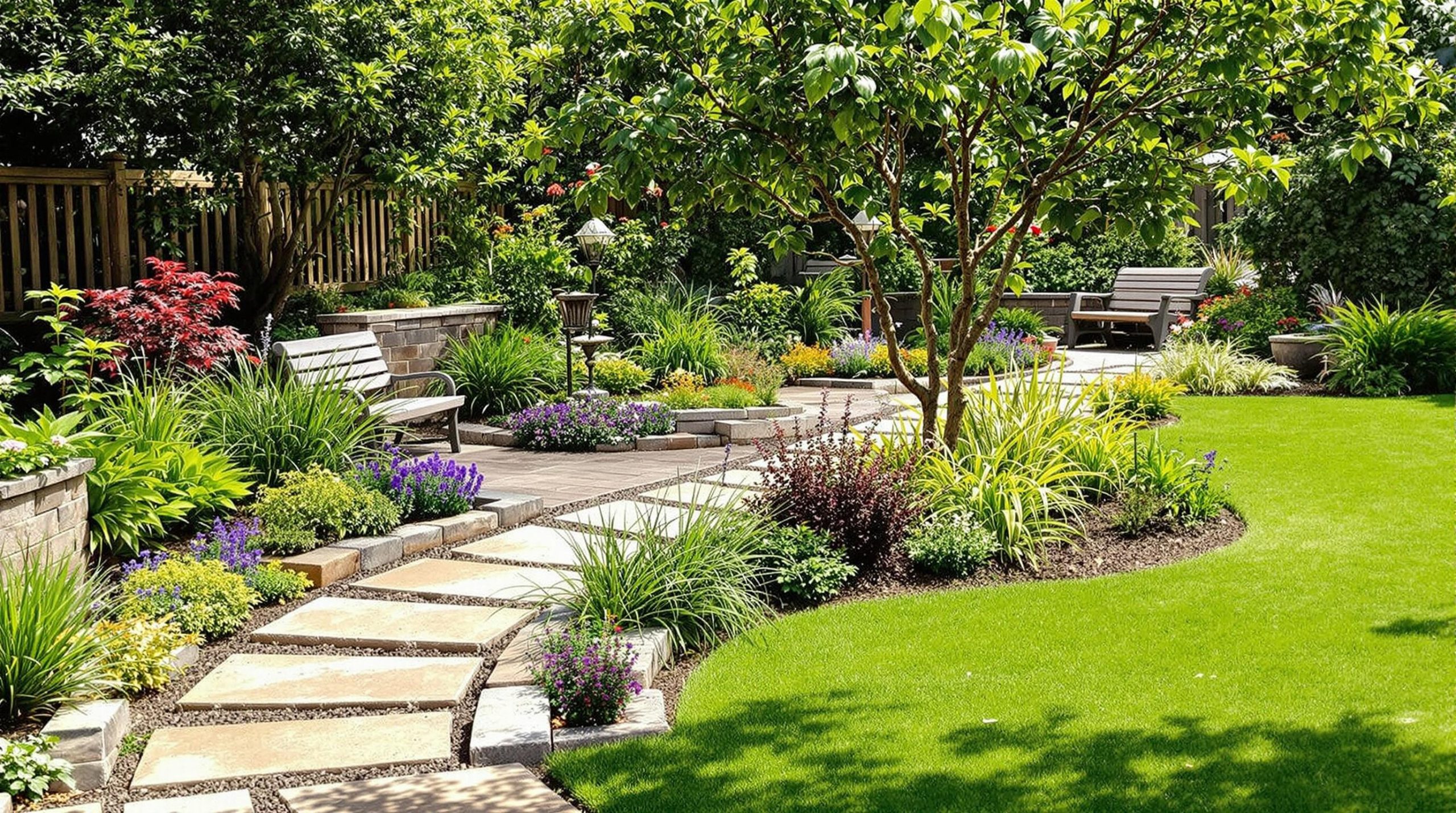
Combine soft turf zones with hard paved areas to create functional outdoor rooms. Pavers provide a solid footing for outdoor dining tables, barbecues, and heavy fire pits.
Selecting Your Pavers
- Natural Stone: Elegant but requires sealing to prevent staining.
- Concrete Pavers: Highly durable and uniform, making them easy to lay.
- Clay Bricks: Classic look that handles heavy foot traffic without fading.
Keep paths wide enough for two people to walk abreast comfortably. One metre is the standard minimum width. When laying pavers, a solid sand base keeps them level. Skipping the sand means your path will look like a rollercoaster after a few months of wet weather. Take your time with the bedding layer. Screed the sand smoothly using a straight timber board.
Final Word
Turning a tired yard into an inviting retreat takes physical effort and smart choices. Do not rush into buying plants before the structural groundwork is complete. Test your soil, fix bad drainage patterns and plan your hard surfaces early on. Get bulk components from reliable vendors to keep your project affordable and moving forward smoothly. Keep your layout functional and suited to your local climate. By focusing heavily on the preparation, you ensure your new garden thrives for years to come.